
Selasa, 18 November 2025 02:47 AM WIB

Failure leaves a deeper imprint on memory than success—a phenomenon rooted in evolutionary psychology and neural processing. When we experience failure, the brain’s limbic system, particularly the amygdala, amplifies the emotional intensity of the event. This heightened arousal strengthens memory consolidation, ensuring we retain lessons from setbacks. Unlike success, which activates reward circuits but often fades quickly, failure triggers sustained attention due to its survival-related significance.
A key reason failure sticks more vividly is its role in adaptive learning. The brain encodes errors with rich sensory and emotional detail to prevent repetition—a mechanism critical for long-term survival. For example, forgetting to lock a door after a near-miss accident could be life-threatening, so such moments are deeply memorized. This emotional salience explains why resurfacing failure often feels urgent and impactful.
Several cognitive biases intensify how we remember failure, often distorting our self-perception. The **negativity bias** predisposes us to focus disproportionately on negative events, making failures more cognitively salient than successes. Confirmation bias further entrenches these memories by leading us to selectively recall evidence that supports our negative self-narratives—such as “I always mess up under pressure”—while dismissing counterexamples.
Hindsight bias compounds this effect by making past mistakes feel predictable in retrospect, even when circumstances were complex. This illusion reinforces shame and self-criticism, turning isolated failures into persistent mental anchors. Recognizing these biases is the first step toward reclaiming agency over how we remember and respond to failure.
Originating in behavioral science, «Взгляд»—a Russian term meaning “look” or “gaze”—represents a structured practice of intentional reflection designed to transform failure from a source of shame into a catalyst for growth. Rooted in cognitive-behavioral principles, «Взгляд» encourages individuals to consciously examine failures with curiosity rather than judgment.
Core principles include:
– **Non-judgmental observation**: Viewing failure as data, not identity.
– **Emotional labeling**: Identifying feelings without suppression.
– **Meaning-making**: Extracting specific lessons tied to actionable change.
For example, a professional who missed a critical deadline might reflect using «Взгляд» not to rehash guilt, but to analyze systemic causes—such as unclear priorities—and design clearer workflows. This deliberate reframing reshapes neural pathways, reducing emotional reactivity and fostering resilience.
Emotion-laden memories of failure are primarily consolidated through interactions between the amygdala—driving emotional intensity—and the hippocampus—encoding contextual details. This neural coupling ensures failure experiences are both vivid and richly detailed, ready for conscious interpretation.
Neuroplasticity enables the brain to rewire these associations: repeated use of «Взгляд» practice strengthens neural circuits linking failure to learning. Over time, what once triggered anxiety becomes a signal for insight. Studies show that individuals who regularly engage in structured reflection exhibit increased activity in the prefrontal cortex during memory retrieval—indicating improved executive control over emotional responses.
Regular «Взгляд» practice thus transforms failure from a passive burden into an active tool for cognitive development, reinforcing adaptive self-talk and problem-solving habits.
The true power of «Взгляд» lies in converting raw failure memory into structured insight. This process begins with **cognitive restructuring**—systematically reframing painful experiences into clear, actionable lessons. Instead of “I failed,” the practitioner learns “What happened, why it happened, and how I’ll adjust.”
Contextual awareness is crucial: recalling failures within their original environment—stress levels, external pressures, team dynamics—provides nuance that prevents oversimplification. When applied consistently, «Взгляд» embeds failure into a growth-oriented identity, where setbacks are not endpoints but stepping stones.
For instance, a student who failed a key exam might reflect not on perceived inadequacy, but on study habits, time management, and seeking help—turning disappointment into a strategic plan.
To harness «Взгляд» in daily life, begin with structured reflection techniques:
– **Journaling prompts**: “What did I expect? What happened? What did I learn?”
– **Emotional check-ins**: Name feelings without judgment.
– **Action planning**: Identify one concrete step forward.
Practicing emotional awareness alongside cognitive reappraisal strengthens neural resilience. Over time, this builds long-term psychological resilience—turning failure into a reliable compass for growth.
| Practice | Purpose |
|---|---|
| Daily reflection using «Взгляд» prompts | Builds consistent neural habit of constructive self-analysis |
| Emotional labeling paired with cognitive reframing | Reduces amygdala-driven reactivity, enhances prefrontal control |
| Weekly review linking failure to long-term goals | Reinforces meaning-making and sustained resilience |
As highlighted in recent research, deliberate reflection practices like «Взгляд» activate neuroplastic changes that reframe failure as feedback—not finality. This cognitive shift empowers individuals to learn from setbacks with clarity and purpose.
“Failure is not the opposite of success, but a teacher within it.” — «Взгляд» principles remind us that how we remember failure shapes our future growth.
For deeper insight into fostering transparent, growth-centered systems—whether in personal development or organizational culture—explore the foundational insights at [Understanding Your Right to Ask: Compliant Gambling Transparency in Practice](https://dracarolinacossi.com.br/2025/08/17/understanding-your-right-to-ask-compliant-gambling-transparency-in-practice/). This link exemplifies how clarity and intentionality transform uncertainty into informed action.

Selasa, 23 Desember 2025
BUKTI PEMBAYARAN JP NIASTOTO 23 NOVEMBER 2025 ========================================================================================== SELAMAT UNTU . . .
Read More
Selasa, 23 Desember 2025
BUKTI PEMBAYARAN JP NIASTOTO 23 NOVEMBER 2025 ========================================================================================== SELAMAT UNTU . . .
Read More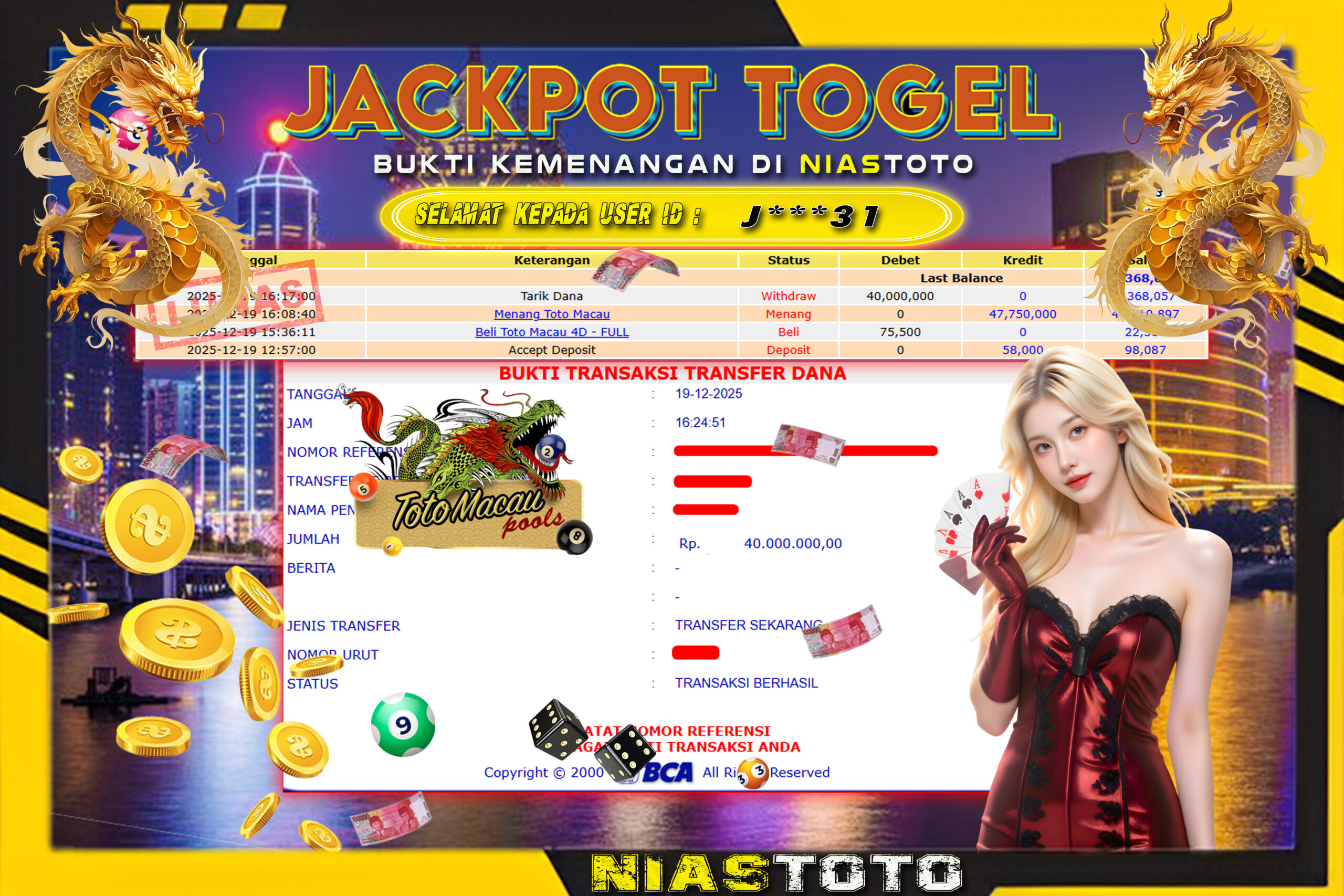
Jumat, 19 Desember 2025
BUKTI PEMBAYARAN JP NIASTOTO 19 NOVEMBER 2025 ========================================================================================== SELAMAT UNTU . . .
Read More